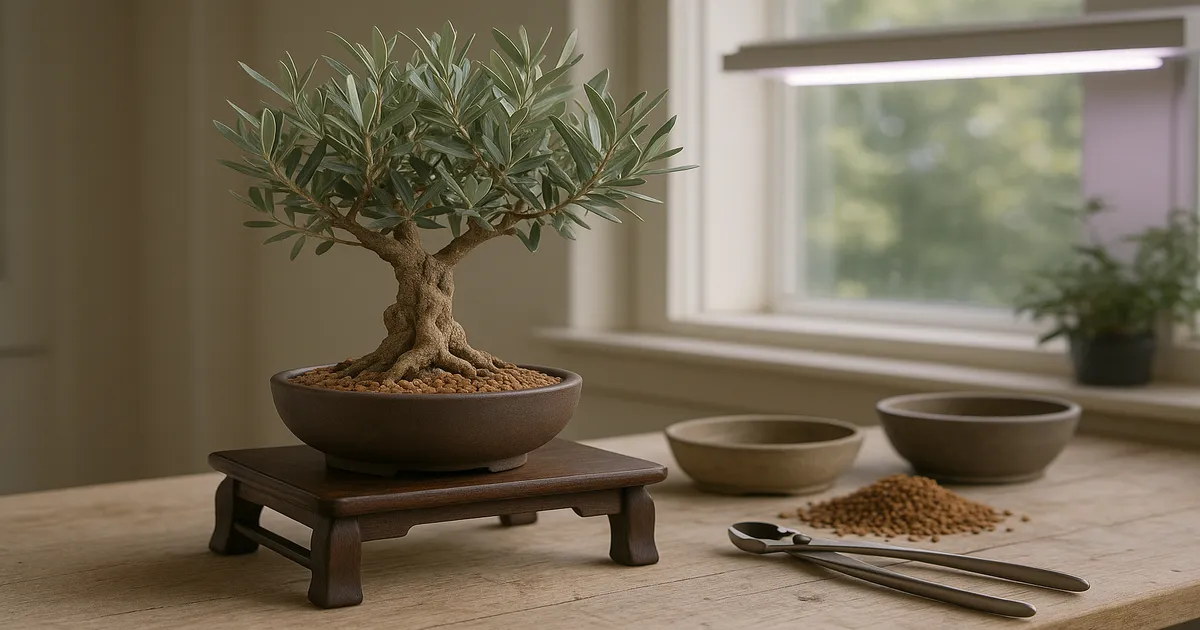
Quick Answer: Yes, you can put an olive tree indoors — but it’s not a typical houseplant. Olea europaea is a full-sun Mediterranean species that demands your brightest window, disciplined watering, and a cool winter dormancy period. Get those three things right and an indoor olive can thrive for years. Neglect them and it will slowly decline.
So, can you put an olive tree indoors? The honest answer is yes — with serious commitment. Olea europaea evolved on rocky, sun-drenched Mediterranean hillsides where light is intense, drainage is perfect, and summers are long and hot. Replicating even a fraction of that environment indoors takes deliberate effort. But it’s absolutely achievable, and the payoff is one of the most characterful, long-lived plants you can grow.
Can You Put an Olive Tree Indoors? What You Need to Know First
Five factors determine whether your indoor olive thrives or slowly fades: light, winter dormancy, drainage, air circulation, and watering discipline. A warm living room with a dim window will fail on at least three of those counts. A south-facing window supplemented with grow lights, a cool garage for winter, and a fast-draining soil mix? That’s a setup that works.
Indoor vs. Outdoor Suitability at a Glance
| Scenario | Suitability | Notes |
|---|---|---|
| Outdoors year-round (Zones 8–11) | ✅ Ideal | Best long-term health |
| Outdoors spring–fall, cool indoors in winter | ✅ Excellent | Recommended for Zones 6–7 |
| Bright south window + grow lights | ⚠️ Acceptable | Requires diligent management |
| Full-time indoors, grow lights only | ⚠️ Possible | Works with consistent care |
| Low-light indoor environment | ❌ Not suitable | Tree will decline |
Understanding the Olive Tree
Botanical Profile: Olea europaea
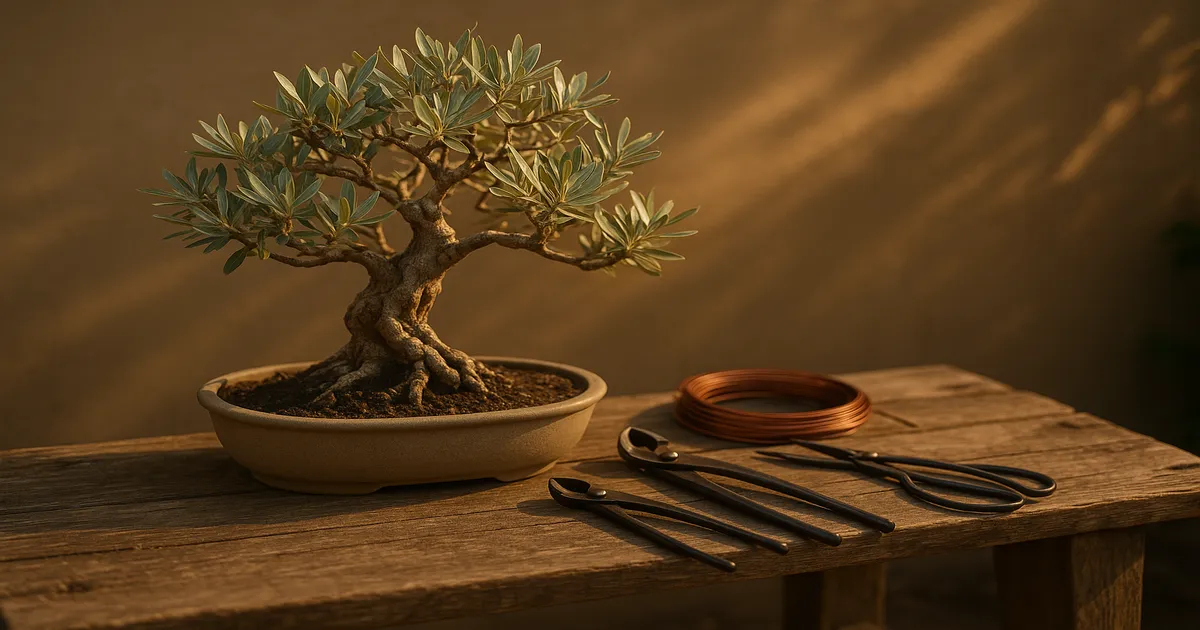
The common olive belongs to the family Oleaceae and is native to the Mediterranean Basin — from Spain and Morocco in the west through Greece, Turkey, and the Levant. It’s an evergreen with small, lance-shaped leaves that are gray-green on top and silvery-white underneath, thanks to tiny reflective scales that reduce water loss in intense sun. Young bark is smooth and gray-green; with age it becomes deeply furrowed and silver-gray — exactly the quality that makes olive so prized in bonsai.
What Its Native Habitat Tells Us About Indoor Care
Wild olives grow in rocky, nutrient-poor, fast-draining soils under 10–14 hours of direct sun. They handle drought, wind, and heat with ease. What they cannot handle is waterlogged roots or prolonged shade. Every indoor care decision — soil mix, watering frequency, pot choice, window placement — flows directly from that native reality.
Best Cultivars for Indoor and Bonsai Use
| Cultivar | Characteristics | Bonsai Suitability |
|---|---|---|
| ’Arbequina’ | Small leaves, compact, heavy fruiting | ⭐⭐⭐⭐⭐ Excellent |
| ’Montra’ (Little Ollie) | Dwarf, non-fruiting, very small leaves | ⭐⭐⭐⭐⭐ Excellent |
| ’Picholine’ | Medium leaves, classic olive form | ⭐⭐⭐⭐ Very Good |
| var. sylvestris (Wild Olive) | Small leaves, thorny, vigorous | ⭐⭐⭐⭐ Very Good |
| ’Swan Hill’ | Fruitless, low pollen, moderate leaves | ⭐⭐⭐ Good |
Arbequina and Montra (Little Ollie) are the top picks for indoor and bonsai cultivation. Both have naturally small leaves that reduce well and compact habits that suit container life. For collectors, yamadori (wild-collected) olive stock from Mediterranean regions is highly sought after for its naturally aged trunks and existing deadwood character.
Light Requirements for an Indoor Olive Tree
How Much Light Does an Olive Need Indoors?
Light is the single most important factor — and the hardest to get right. Outdoors, olives receive 30,000–50,000+ lux on a bright summer day. A good south-facing window delivers roughly 5,000–10,000 lux. That gap is significant, and most trees kept on a windowsill alone will gradually weaken over months or years.
A south-facing window (in the Northern Hemisphere) is the absolute minimum, and it needs to be unobstructed — no net curtains, no overhanging eaves, no nearby buildings cutting off the sky. Even then, you’re working with around 20% of the light the tree would prefer. Moving your olive outdoors for the warmer months, even just onto a balcony or patio, makes a dramatic difference to its long-term health.
Using Grow Lights to Supplement Natural Light
A quality grow light can bridge the gap between a windowsill and what the tree actually needs. Look for a full-spectrum LED in the 3000K–6500K range — something like the Spider Farmer SF-1000 is a popular and well-regarded option . Aim for a PPFD of 400–800 µmol/m²/s at canopy level, position the light 12–18 inches (30–45 cm) above the foliage, and run it 14–16 hours per day on a timer. Combine that with your best window and you have a genuinely workable indoor setup.
Signs Your Olive Isn’t Getting Enough Light
- Long, stretched internodes (etiolation) — new shoots reaching toward the light
- Pale, yellowing leaves with a washed-out look across the whole canopy
- Leaf drop, especially on interior branches
- Weak, spindly new growth that doesn’t harden off properly
- Failure to bud back on older wood after pruning
If you’re seeing two or more of these, more light is almost always the answer.
Temperature, Dormancy, and Winter Care
Why Indoor Olive Trees Need a Cool Winter
This is where most indoor olive owners go wrong. During the growing season, olives are happiest between 65–85°F (18–29°C) — which overlaps comfortably with most living spaces. The problem isn’t summer temperatures; it’s winter ones.
Olives need approximately two months at 35–50°F (2–10°C) to set flower buds and maintain long-term vigour. A tree kept in a warm 70°F (21°C) living room year-round will gradually weaken — not dramatically, but steadily over a few seasons. It won’t fruit, and it may eventually start dropping leaves and losing vigour with no obvious cause. “Indoors” in winter should mean cool, not comfortable.
Where to Store Your Olive Tree in Winter
- Unheated garage — ideal if temperatures stay above 20°F (-7°C)
- Cool basement — good if you can provide a little supplemental light
- Cold greenhouse or cold frame — the gold standard for bonsai collectors
- Unheated spare room — acceptable if it stays consistently cool
Reduce watering significantly during dormancy — every 10–21 days is typical — but never let the root ball dry out completely.
Cold Hardiness and Frost Protection
Established Olea europaea can handle down to 15–20°F (-9 to -7°C), but bonsai specimens in shallow containers are more vulnerable because the roots are exposed. Protect your tree from hard freezes below 25°F (-4°C) and from freezing winds, which cause rapid desiccation. In USDA Zones 8–11, olives can stay outdoors year-round. Zone 7 works with winter protection; Zone 6 and colder, bring it in.
Soil, Watering, and Drainage
The Right Soil Mix for an Indoor Olive Tree
Waterlogged roots are the number one killer of indoor olives. The soil must drain fast and stay open — the opposite of standard potting compost.
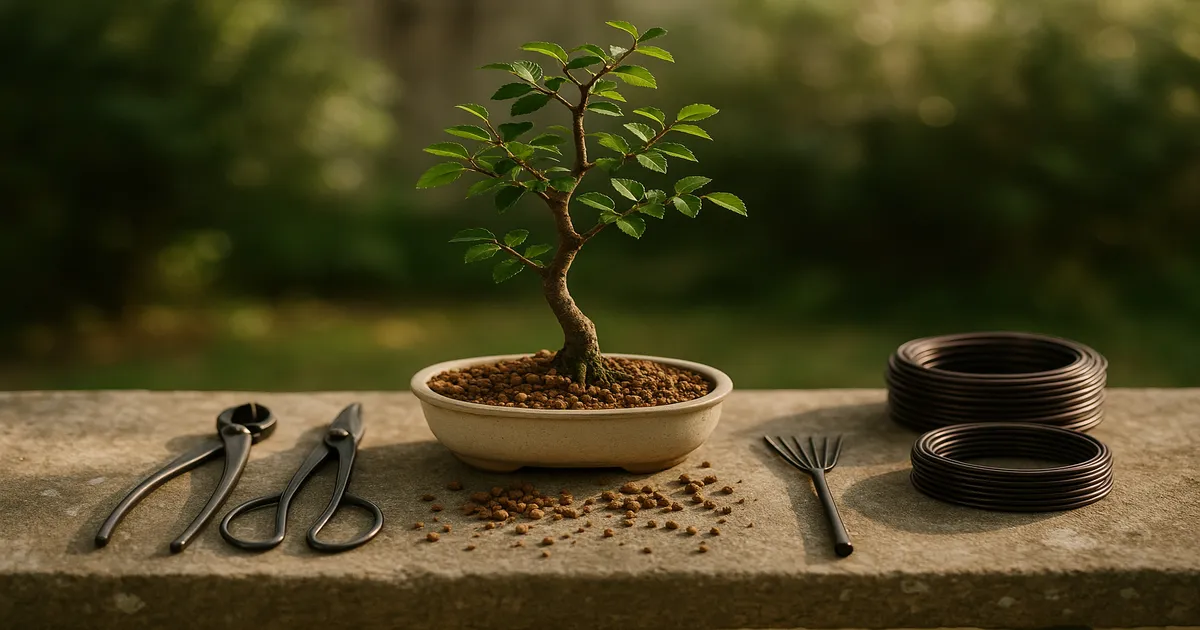
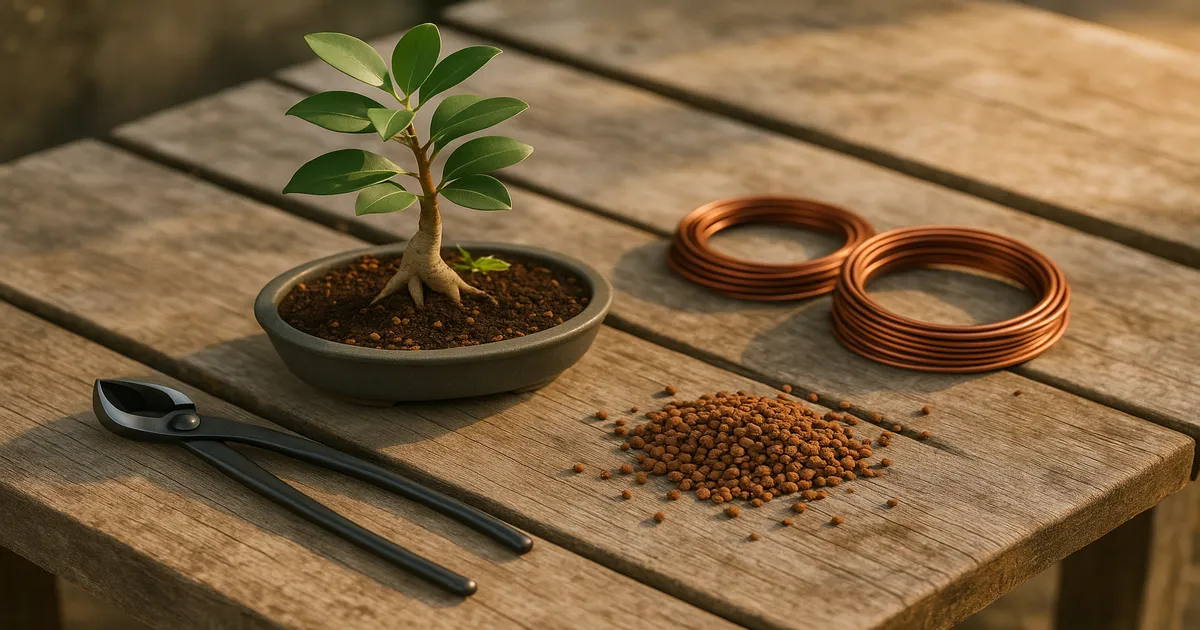
Recommended mix: equal parts akadama, pumice, and lava rock (roughly 30–35% each), with a particle size of 3–6mm. A pre-blended inorganic bonsai mix such as Bonsai Jack Inorganic Bonsai Soil is a convenient and reliable option that replicates the rocky, free-draining conditions of the olive’s native habitat.
Beginner alternative: 50% coarse perlite + 50% fine pine bark. Not perfect, but vastly better than any peat-based mix.
Olives prefer a slightly alkaline to neutral pH of 6.5–8.0 — one of the few bonsai species that actually tolerates alkaline conditions. Avoid peat-based mixes or anything that stays wet for more than a day or two after watering.
How to Water an Indoor Olive Tree
Skip the fixed schedule. Check the top 1–2 cm of soil — when it begins to dry, water thoroughly until water flows freely from the drainage holes. Indoors, that typically means every 3–7 days in summer and every 10–21 days during winter dormancy. Every setup is different.
Olives are sensitive to fluoride and chlorine. Rainwater is ideal; filtered water or tap water left to sit for 24 hours works well. Avoid softened water — the sodium content causes problems over time. Discard any water sitting in the saucer within 30 minutes. Standing water is an invitation to root rot.
Pruning and Shaping
Maintenance Pruning
Olives bud back readily on old wood — even on thick, aged branches — which makes them forgiving and responsive to regular pruning. Growth is opposite (buds emerge in pairs), with the main flush in spring and a possible secondary push in late summer.
Throughout the growing season, pinch new shoots back to 2–4 leaf pairs once they’ve extended to 4–6 pairs. Remove crossing branches, downward-growing shoots, and anything growing directly toward or away from the viewer. Keep the interior open so light reaches the inner branches — this is what drives back-budding.
Structural Pruning
Do heavy shaping in late winter to early spring, just before the growing season begins. Use a concave cutter for all branch removals — the Kaneshin No.2 Concave Branch Cutter is a well-made and widely available option — to create a slightly hollow wound that heals flush with the trunk. Apply wound sealant to any cut larger than 6mm in diameter. (Kiyonal Cut Paste)
The first primary branch should sit roughly one-third of the tree’s total height from the base. Work up the trunk alternating left, right, and back placement. For large branches, consider staged reduction over two or three seasons rather than removing everything at once.
Creating Deadwood: Jin and Shari
The olive’s naturally gnarled character makes it one of the best species for jin (deadwood branch stubs) and shari (deadwood trunk channels). Apply lime sulfur to carved deadwood to preserve it and create the bleached, weathered appearance of an ancient tree. Work on deadwood in late spring or summer when the tree is actively growing and can compartmentalize wounds. Large wounds over 25mm can take 3–7 years to fully callus — patience is essential.
Wiring Olive Bonsai
Choosing Wire and Timing
| Branch Diameter | Wire Gauge | Type |
|---|---|---|
| Very fine shoots (under 2mm) | 1.0–1.5mm | Aluminium |
| Fine branches (2–4mm) | 1.5–2.0mm | Aluminium |
| Medium branches (4–8mm) | 2.5–3.5mm | Aluminium or Copper |
| Heavy branches (8–15mm) | 3.5–5.0mm | Copper |
| Trunk bending (15mm+) | 5.0–8.0mm + guy wires | Copper |
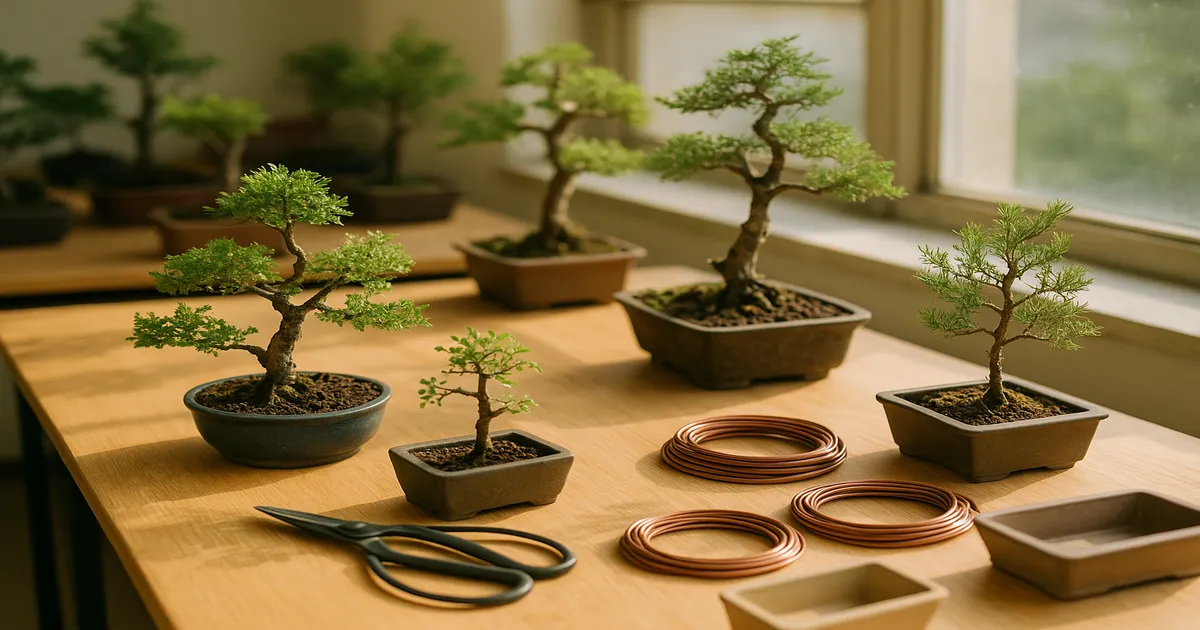
A good rule of thumb: wire should be roughly one-third the diameter of the branch. Aluminium wire is more forgiving and easier to work with — Roshi Aluminium Bonsai Wire is a reliable starting point . Copper holds better for heavy branches but bites into bark faster if you’re not watching it.
The best wiring window is late winter to early spring, before new growth emerges — branches are most visible and the tree is about to enter its most vigorous healing period. A secondary window opens in late fall once growth has hardened off. Avoid wiring during active growth flushes when bark is soft and tender.
Wiring Tips
- Anchor the wire in the soil or around the trunk before moving to branches — never leave a free end
- Wire two branches of similar diameter simultaneously with one length of wire for better anchorage and less waste
- Wrap at 45° — too steep and the wire won’t hold; too shallow and you risk stripping bark
- The wire should tighten, not loosen, as you move the branch into position
- Snug, not biting — you should just be able to slide a fingernail underneath
Check wired branches every two to three weeks once spring growth accelerates. Olives can scar quickly — the bark expands faster than you’d expect. Remove wire by cutting it in sections rather than unwinding it, which risks snapping brittle branches or tearing bark.
Troubleshooting Common Problems
Yellowing Leaves
Yellowing almost always points to overwatering or light deficiency. Overwatering typically shows as yellowing on older, interior leaves with soil that stays wet. Light deficiency produces a more general pallor across the whole canopy, often with stretched internodes. Check the soil first — that usually tells you which problem you’re dealing with.
Leaf Drop
Both overwatering and underwatering can cause leaf drop, which makes it confusing. The diagnostic step is simple: check soil moisture. Wet soil plus leaf drop points to overwatering. Bone-dry soil plus leaf drop means drought stress. Some leaf drop is also normal when a tree moves from outdoors to indoors in autumn as it adjusts to lower light levels.
Root Rot
If your tree is wilting despite wet soil, suspect root rot. Unpot the tree, wash the roots, and look for soft, dark, mushy root tips — healthy roots are firm and white to tan. Cut away all rotted material with sterile scissors, dust the cuts with powdered sulfur or cinnamon, and repot into fresh fast-draining mix. Hold off watering for two to three days to let cut surfaces dry, then resume cautiously.
Pests
- Scale insects — brown, waxy bumps on stems and leaf undersides; treat with neem oil or rubbing alcohol on a cotton swab
- Spider mites — common in dry indoor air; fine webbing and stippled, dull leaves are the giveaway; increase air circulation and treat with insecticidal soap
- Olive knot — a bacterial disease causing rough, gall-like swellings on branches; prune out affected wood with sterilized tools and avoid overhead watering
Frequently Asked Questions
Can you put an olive tree indoors permanently?
Yes, but it requires deliberate management of light, temperature, and watering. The biggest challenges are providing adequate light and a cool winter dormancy period. Trees kept in warm, low-light conditions year-round will gradually weaken and are unlikely to fruit.
Where is the best place to put an olive tree indoors?
Directly in front of a south-facing window — the brightest, most unobstructed position in the house. Supplementing with a full-spectrum LED grow light running 14–16 hours a day will significantly improve long-term health. Avoid north-facing windows or positions more than a few feet from the glass.
Do indoor olive trees need a winter dormancy period?
Yes. Olives need approximately two months at 35–50°F (2–10°C) to maintain long-term vigour and set flower buds. An unheated garage, cool basement, or cold greenhouse works well. Keeping the tree in a warm living room year-round causes gradual decline and prevents fruiting.
How often should you water an indoor olive tree?
There’s no fixed schedule — it depends on your pot, soil, and environment. Check the top 1–2 cm of soil and water thoroughly when it begins to dry. In summer that’s typically every 3–7 days; in winter dormancy, every 10–21 days. Always let excess water drain freely and never leave the pot sitting in a saucer of water.
Can you put an olive tree indoors if you don’t have a south-facing window?
It’s difficult, but not impossible. A high-output full-spectrum LED grow light running 14–16 hours a day can partially compensate for a poor window position. That said, even with grow lights, getting the tree outdoors for spring and summer — even on a balcony — will make a significant difference to its long-term health and vigour.